
Military Tire Disassembly & Runflat Machine
Explore military tire disassembly with GM Defensive's NATO-certified runflat machines — safe, fast, and proven for tactical vehicle fleets.
Read MoreRun-flat resource
Discover GM Defensive's NATO-certified military tire disassemble tool — a safe, fast solution for run-flat removal and installation.
Maintaining mission-critical mobility for armored and tactical vehicles requires precision equipment, trained personnel, and standardized procedures. Modern fleets — from HMMWV to JLTV, MRAP, APC, and LAV families — depend on run-flat systems to sustain movement after deflation or ballistic damage. These systems dramatically increase survivability but introduce significant maintenance complexity.
Traditional manual techniques are slow, unsafe, and manpower-intensive. This guide explains the operational difference between manual and machine-based methods and clarifies why professional buyers search for terms like military tire disassemble tool, run flat disassembly, run flat inserter, and hmmwv tire tool when preparing acquisition documentation.
This page also serves as a procurement-ready brief for defense organizations evaluating the adoption of machine-assisted run-flat disassembly and installation systems.
The following procedure synthesizes standard military maintenance doctrine and OEM-aligned steps referenced in internal runflat change documentation.
These steps illustrate why buyers with fleet-level responsibility seek purpose-built equipment instead of relying on improvised tooling.
Referencing capabilities described in GM Defensive systems such as workshop, container, and trailer models.
Machine-based methods reduce:
Reduced MTTR translates directly into higher operational readiness and fewer maintenance bottlenecks — critical to PMs under readiness KPIs and contracting officers defending lifecycle cost.
Procurement and contracting officers require FAR/DFARS-aligned justification. Key drivers include:
For a 200-vehicle MRAP/JLTV fleet:
Payback period typically <12 months.
We provide full compliance packages for contracting officers:
Equip your depot or field unit with a NATO-certified, ISO/CE-approved military tire disassemble tool designed for modern armored vehicles.
Does this system support HMMWV tires? Yes. It is fully compatible with 37×12.50R16.5 tires and functions as a true hmmwv tire tool.
Can the machine handle heavy MRAP/JLTV runflat disassembly? Yes. It performs reliable run flat disassembly on 395/85R20 and 16.00R20 assemblies.
Is the runflat installation tool included? Yes. All systems include an integrated run flat inserter module supporting safe installation.
Do these machines have NATO Stock Numbers? Yes. All workshop, container, and trailer models have assigned NSNs for streamlined procurement.
How long does it take to train operators? Most operators reach competency within several hours with train-the-trainer materials included.
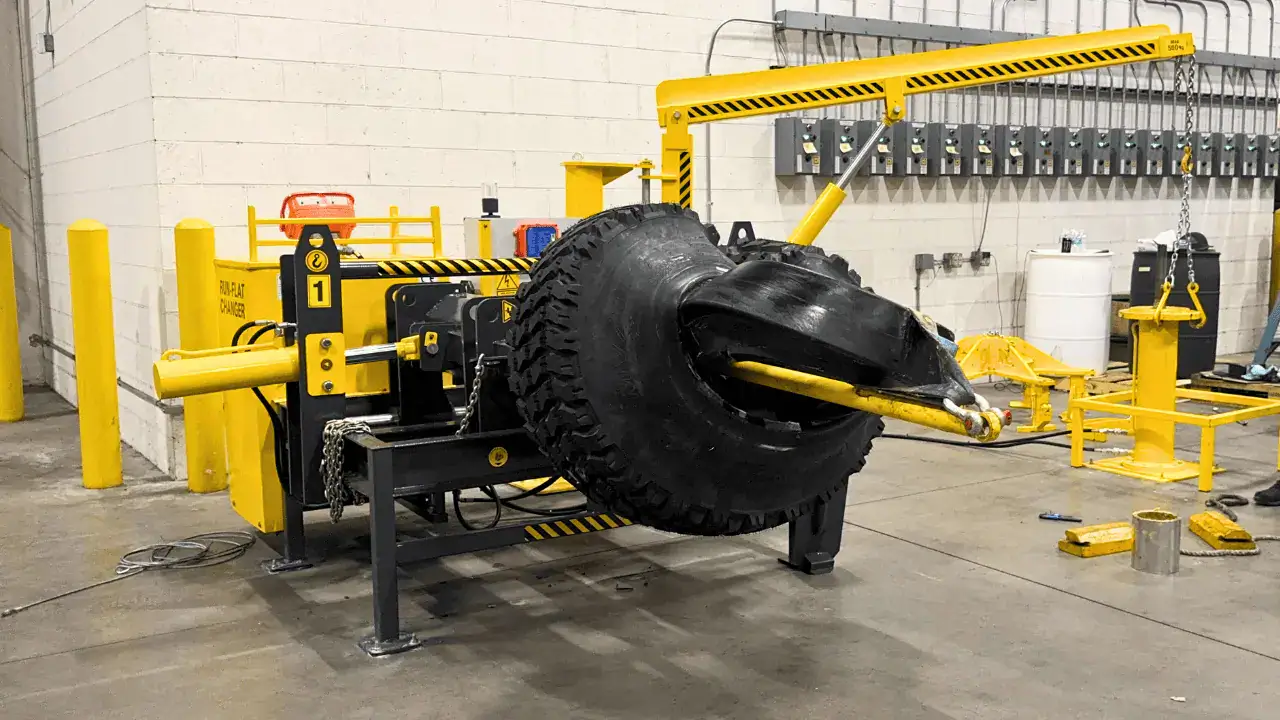 run flat machine
 Explore military tire disassembly with GM Defensive's NATO-certified runflat machines — safe, fast, and proven for tactical vehicle fleets.
Read More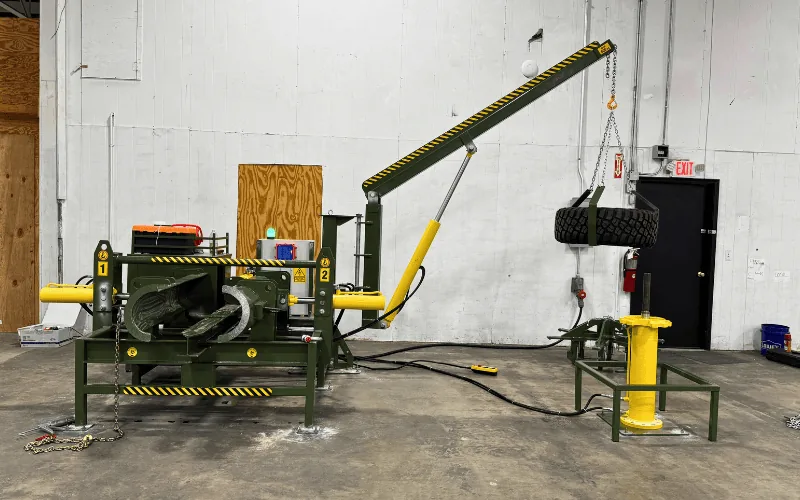 run flat machine
 Discover the innovations in GM Defensive's run-flat tire changers and how they stack up against competitors in military vehicle maintenance.
Read More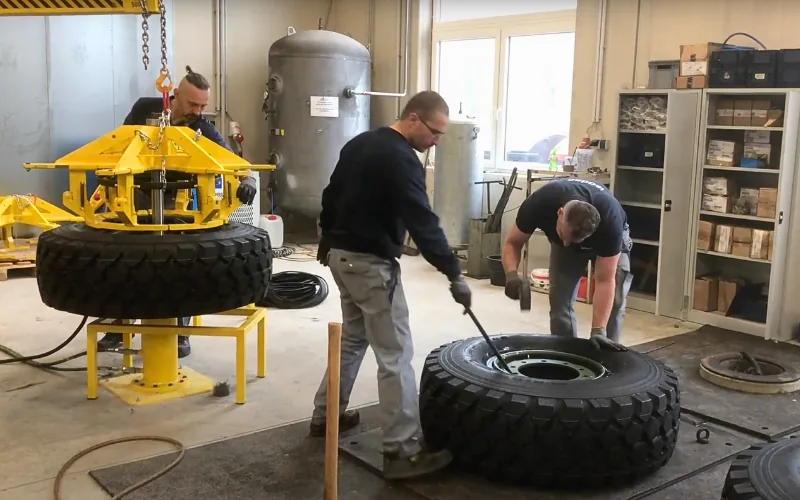 run flat machine
 Five practical benefits of using run-flat tire changer machines for armored vehicle maintenance teams.
Read More