
Military Tire Disassemble Tool & Run-Flat Disassembly Guide
Discover GM Defensive's NATO-certified military tire disassemble tool — a safe, fast solution for run-flat removal and installation.
Read MoreRun-flat resource
Explore military tire disassembly with GM Defensive's NATO-certified runflat machines — safe, fast, and proven for tactical vehicle fleets.
Armored fleets are only as mobile as their tires. Modern tactical vehicles — HMMWV, JLTV, MRAP, APC, LAV — run on heavy, beadlocked wheels with internal runflats. These assemblies are designed to survive contact, but they are not designed to be easy to work on with generic shop equipment.
This guide explains why a dedicated military tire disassemble tool and runflat machine is now standard equipment for serious defense maintenance units. It provides a step-by-step overview of run flat disassembly, compares manual versus machine workflows, quantifies MTTR gains, and outlines a pragmatic ROI and procurement justification.
The tone and structure are aligned with field-level and depot-level maintenance practices, so maintenance chiefs and procurement officers can use this as a reference when specifying tooling for new programs or upgrades.
A typical tactical wheel assembly includes: rim, tire, beadlock hardware, and an internal runflat insert. The goal of run flat disassemble operations is to separate these components without damaging the rim or insert and without exposing technicians to uncontrolled forces.
A dedicated machine provides fixtures and hydraulic assistance to make each of these steps repeatable and safe, especially when handling large, heavy assemblies.
Where no dedicated machine is available, technicians typically rely on:
Challenges:
Manual methods can be made safe with training and discipline, but they do not scale well in high-tempo operations with large fleets.
A dedicated military tire disassemble tool combined with a powered runflat machine changes the process:
Benefits:
Mean Time To Repair (MTTR) is a critical maintenance KPI. For wheel-related tasks, MTTR includes:
Indicative example for one heavy runflat wheel:
If a maintenance company processes 10 runflat wheels per day:
Result: ~11 labor hours freed per day. Over 220 working days, that's ~2,420 labor hours — more than one full-time technician's annual workload.
Runflat wheel assemblies are heavy, awkward, and often contaminated with mud, sand, or road debris. Manual handling exposes technicians to:
A properly designed military tire disassemble tool with integrated guards and remote controls mitigates these hazards:
For commanders and safety officers, this reduces recordable incidents and supports a more sustainable maintenance tempo.
A key requirement for any high-investment machine is multi-platform compatibility. A high-end system is configured so one military tire disassemble tool and machine platform can be:
This multi-platform approach protects the investment and simplifies procurement: one core machine, plus platform-specific fixtures.
Procurement officers and program managers need to justify why a specialized machine is better than more manpower and conventional tools. Key justification pillars:
For formal justifications, it's effective to frame the acquisition against metrics: MTTR, vehicle availability rate, incident reports, and cost per wheel serviced.
A simple ROI model for a runflat machine can be expressed in three components:
ΔMTTR (manual vs machine) × number of wheels per year × labor cost per hour.
Reduction in damaged rims/runflats per year × replacement cost.
Additional vehicle-available days × value per day (mission, training, readiness).
Example:
Labor savings:
If the machine and all fixtures cost 120,000 USD, simple payback from labor alone is under 3 years. Adding avoided rim/runflat damage and safety benefits typically shortens the payback further.
Why can't we rely on standard automotive tire machines? Standard machines are not designed for heavy beadlocked wheels with internal runflats. Clamping ranges, force levels, and safety systems are insufficient. A specialized military tire disassemble tool and machine is engineered for these loads and geometries.
What makes a proper run flat disassembly machine different? It combines high-capacity bead-breaking, controlled rim separation, and fixtures for handling the runflat ring. It is designed from the ground up for run flat disassembly and reassembly, not just passenger car wheels.
Do we need a separate machine to reinstall inserts? No. Many modern systems operate as both a disassembly tool and a run flat inserter, allowing technicians to safely mount the runflat back into the tire cavity using the same base machine and fixtures.
Is there tooling specific to Humvees? Yes. A dedicated hmmwv tire tool interface or adapter kit ensures correct clamping and support for 16.5" HMMWV beadlock wheels, preventing rim damage and improving ergonomics.
How does this help with JLTV, MRAP, APC, and LAV fleets? By using modular adapters, a single machine can be configured for multiple platforms. Maintenance teams can run flat disassemble and reassemble wheels from JLTV, MRAP, APC, and LAV with the same machine, only changing the fixtures.
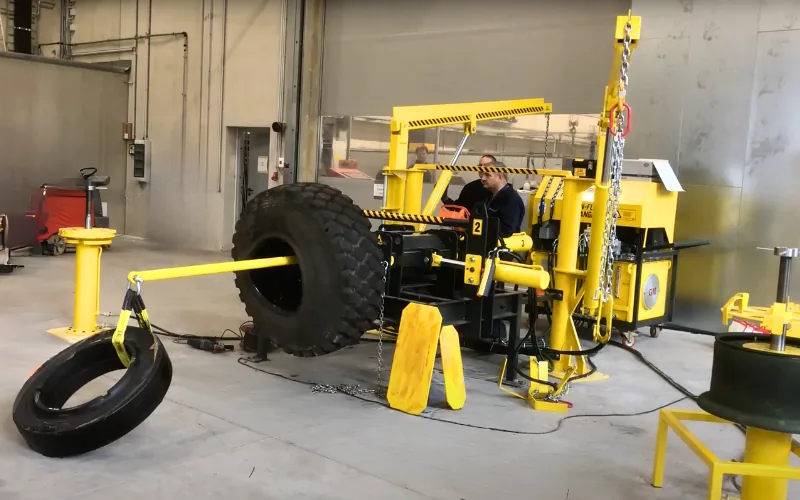 run flat machine
 Discover GM Defensive's NATO-certified military tire disassemble tool — a safe, fast solution for run-flat removal and installation.
Read More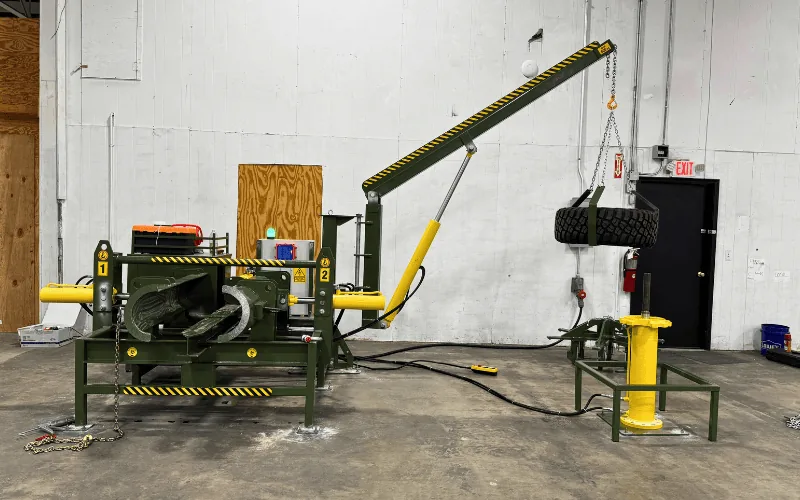 run flat machine
 Discover the innovations in GM Defensive's run-flat tire changers and how they stack up against competitors in military vehicle maintenance.
Read More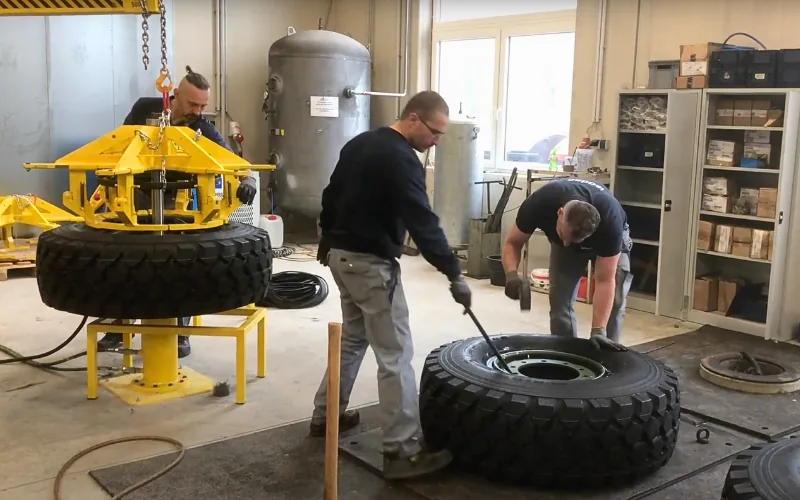 run flat machine
 Five practical benefits of using run-flat tire changer machines for armored vehicle maintenance teams.
Read More