
Military Tire Disassembly & Runflat Machine
Explore military tire disassembly with GM Defensive's NATO-certified runflat machines — safe, fast, and proven for tactical vehicle fleets.
Read MoreRun-flat resource
A comprehensive guide to Stryker combat vehicle and APC run-flat tire replacement, covering runflat disassembly, Hutchinson insert systems, and selecting the right armored vehicle tire machine for military maintenance operations.
The Stryker family of wheeled combat vehicles — including the M1126 Infantry Carrier Vehicle, M1128 Mobile Gun System, and emerging variants — relies on eight-wheel independent suspension with run-flat tire systems that enable continued mobility after ballistic tire damage. Similarly, armored personnel carriers (APCs) across global forces depend on run-flat inserts to maintain operational tempo when tires are compromised.
These run-flat systems use heavy-duty rubber or composite inserts (typically Hutchinson or equivalent) that sit inside the tire cavity and bear the vehicle's weight when air pressure is lost. For an 8×8 Stryker weighing up to 19 tons, each wheel assembly represents a significant mass that requires machine-assisted handling for safe and efficient tire service.
Without a purpose-built run-flat machine for armored vehicles, maintenance teams face extended downtime, increased injury risk, and potential damage to expensive run-flat inserts and ballistic rims during disassembly and reassembly.
The run-flat disassembly workflow for Stryker and similar APC platforms follows a precision sequence: wheel removal from the vehicle using appropriate lifting equipment, secure positioning on the runflat machine platform, controlled deflation, locking-ring or beadlock hardware removal, hydraulic bead separation, and machine-assisted run-flat insert extraction.
Stryker wheels typically use 20-inch rims with heavy Hutchinson run-flat inserts. The extraction force required to remove a seated insert from a Stryker tire significantly exceeds what manual methods can safely deliver. A hydraulic military run-flat changer machine applies calibrated, controlled force through the full extraction stroke — protecting both the technician and the reusable insert.
When evaluating a tire machine for armored vehicles, procurement teams should verify compatibility with the specific rim diameters in their fleet inventory. Stryker platforms use 20-inch rims, while other APCs like the Boxer, BTR-series, and VBCI families use rim sizes ranging from 16 to 24 inches.
The GMT-099 Trailer Model is particularly well-suited for Stryker brigade maintenance operations because it can be towed to forward staging areas where wheeled combat vehicles are concentrated. The trailer-mounted configuration provides the same hydraulic capability as fixed workshop models while maintaining road-mobile deployment flexibility.
Critical evaluation factors include: maximum rim diameter capacity, hydraulic force output for insert removal, integrated lifting systems for heavy wheel assemblies, dual control interfaces (joystick and radio remote), and comprehensive training and spare-parts support from the manufacturer.
Proper Hutchinson run-flat insert installation requires clean rim surfaces, correct lubricant application on the insert exterior and tire bead areas, precise alignment during insertion, and controlled hydraulic press-fitting to seat the insert without damage. Machine-assisted installation ensures consistent seating pressure across the full circumference of the insert.
Post-installation checks should include visual inspection for proper insert seating, tire bead position verification, locking-ring torque verification, and inflation to specified operating pressure. A standardized machine-assisted workflow makes these checks repeatable across different technician skill levels and operating environments.
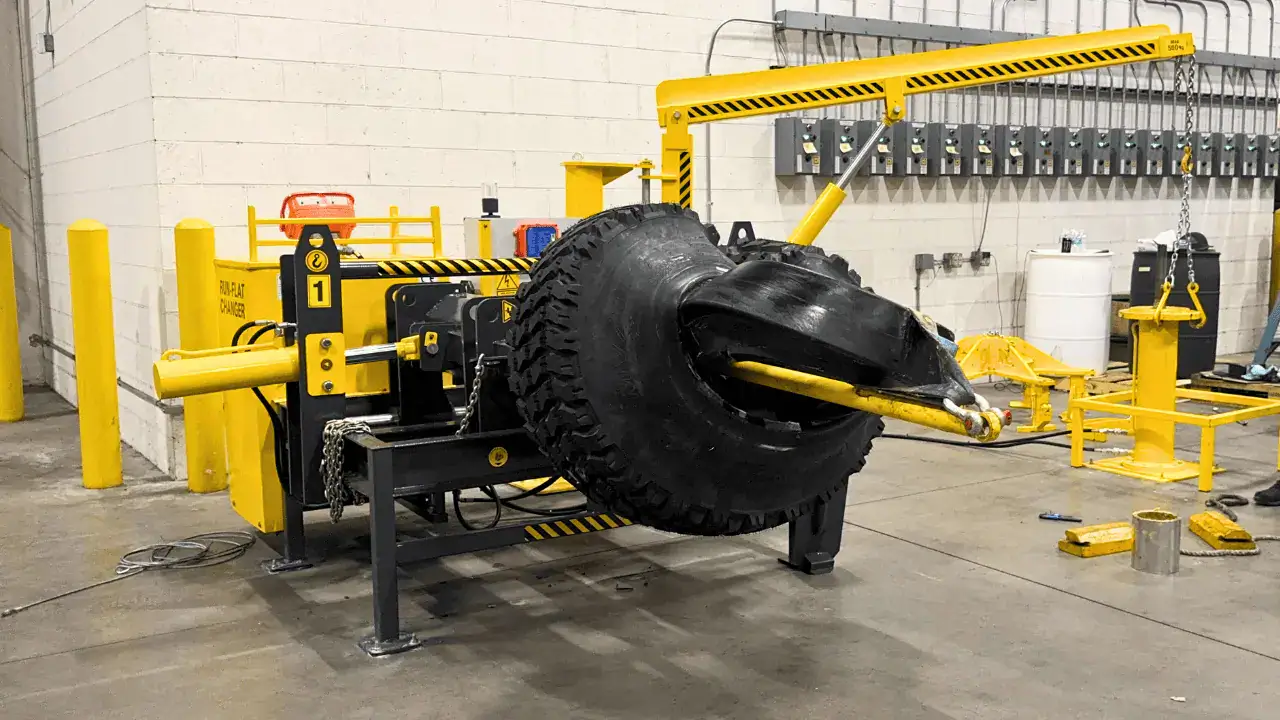 run flat machine
 Explore military tire disassembly with GM Defensive's NATO-certified runflat machines — safe, fast, and proven for tactical vehicle fleets.
Read More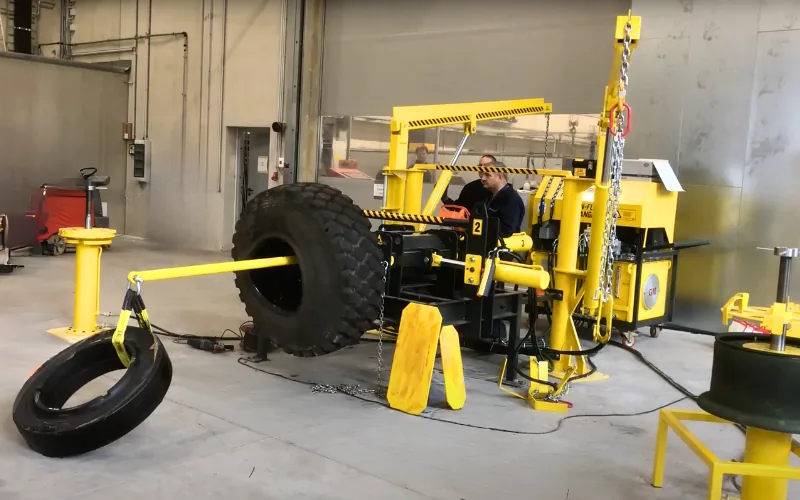 run flat machine
 Discover GM Defensive's NATO-certified military tire disassemble tool — a safe, fast solution for run-flat removal and installation.
Read More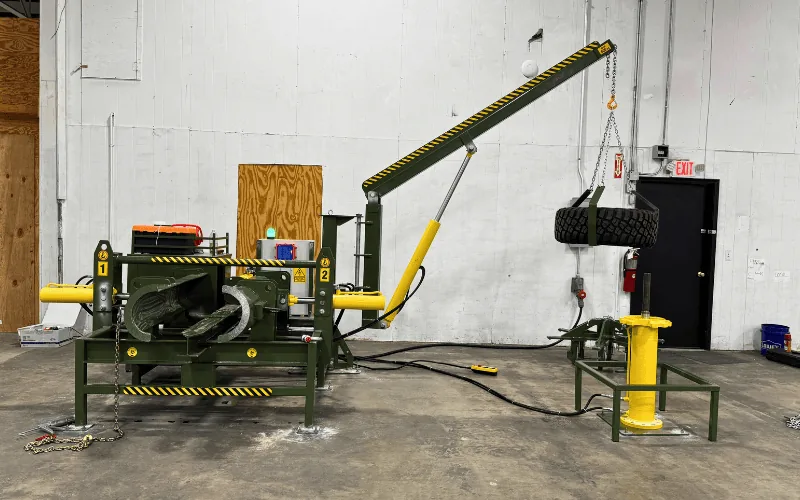 run flat machine
 Discover the innovations in GM Defensive's run-flat tire changers and how they stack up against competitors in military vehicle maintenance.
Read More